āhuarangi
1. (noun) climate.
Nā te Māori te kūmara, te taro, te hue, te uwhi me te tī pore i mau mai ki Aotearoa. Nā te mātao o te āhuarangi o Aotearoa, he uaua ēnei kai te whakatipu (Te Ara 2014). / Māori brought kūmara (sweet potato), taro, gourds, yams and the Pacific cabbage tree to New Zealand. Because of New Zealand's cooler climate these are difficult to grow.
2. (modifier) mild weather, temperate climate.
Nā te piki me te heke o te pā mahana o tōna tinana, ka āhei te tuatara te noho ki tēnei whenua hātai (Te Ara 2015). / Because of its variable body temperature, the tuatara is able to live in this temperate land.
pukanui
1. (noun) puka, Meryta sinclairii - a tree with large, shiny, leathery leaves found in warm climates and native to the Three Kings Islands and on the Hen and Chicken Islands. Fruit black and succulent. It is common as a garden tree in warmer parts of Aotearoa/New Zealand.
Synonyms: puka
pōporohua
1. (noun) breadfruit tree, breadfruit, Artocarpus altilis - a large, evergreen, tropical tree with large, round, starchy fruit originating in the South Pacific and was spread to the rest of Oceania. It has been an important staple crop in the Pacific for more than 3,000 years, but does not grow in the colder climate of Aotearoa/New Zealand.
Kīhai te pōporohua, te niu me te panana i tipu ki Aotearoa nei – he tipu ēnei i mauria haere e ngā tīpuna Māori i ō rātou torotoronga i Te Moananui-a-Kiwa (Te Ara 2011). / Breadfruit, coconut palms and bananas did not grow in New Zealand – these were plants Māori ancestors carried throughout the Pacific in their explorations.
pōporo
1. poroporo, Solanum aviculare and Solanum laciniatum - native shrubs to 3 m tall with dark, soft, lance-shaped or lobed, alternating leaves. Flowers are white to blue-purple and the fruit yellow to orange. Most common along the edges of forest and in scrub. The fruit is poisonous until fully ripe. .
Ko tēnei mea ko te hōuto, he hua pōporo, he mea āta kimi ki ngā mea papai, pai o te maoa, o te āhua hoki; ka huihui aua hua pōporo, ka herea ki tētehi pito o te tumu, kia haere atu ai te tūī ki te kai i aua hua (JPS 1895:139). / The hōuto is the poroporo fruit very carefully selected for the best ones, quite ripe and of a perfect shape; that poroporo fruit is gathered and tied to an end of the bird snare to attract the tūī.
See also poroporo
Synonyms: kohoho, tūpurupuru, peoi
2. (noun) breadfruit tree, breadfruit, Artocarpus altilis - a large, evergreen, tropical tree with large, round, starchy fruit originating in the South Pacific and was spread to the rest of Oceania. It has been an important staple crop in the Pacific for more than 3,000 years, but does not grow in the colder climate of Aotearoa/New Zealand.
Ka kite i te pōporo whakamarumaru o Uenuku, ka kainga e rāua (M 2004:28). / When they saw Uenuku's shady breadfruit tree, they ate them.
See also pōporohua
poroporo
1. (noun) breadfruit tree, breadfruit, Artocarpus altilis - a large, evergreen, tropical tree with large, round, starchy fruit originating in the South Pacific and was spread to the rest of Oceania. It has been an important staple crop in the Pacific for more than 3,000 years, but does not grow in the colder climate of Aotearoa/New Zealand.
Ko te haerenga atu o Tamatekapua i runga i āna poutoti, ka tīmata te katokato i ngā hua o te poroporo (TWK 3:14). / Tamatekapua went on his stilts and began picking the fruit of the breadfruit tree.
See also pōporo
kuru
1. (verb) (-a,-ngia,-tia) to strike with the fist, thump, pelt, beat, pound, throw.
He tāne rou kākahi ka moea, he tāne moe i roto i te whare kurua te takataka (TTT 1/10/1922:12). / The husband dexterous at dredging freshwater mussels will be slept with, but the husband who sleeps idly in the house will have his head thumped. (A whakataukī stressing the value of hard work and a wife's appreciation of a good provider.)
Synonyms: kurukuru, karaepa, epa, whākuru, opa, tuki, pao, āki, kōmekemeke, pātuki, pāuna, hamahama, pehu, patupatu, tātā, poutuki
2. (noun) mallet, pestle, fragment, hammer stone.
Ko ngā kōhatu ka tohungia ka paoa ki te kuru kia maramara. Kātahi kua whakamahia anō ngā kuru hei whakamaheni i ngā taratara (Te Ara 2014). / Selected rocks were struck with hammer stones to produce flakes. Then the hammer stones were also used to smooth rough surfaces.
3. (noun) an ornament of greenstone.
He kōtore huia kei te māhunga, he kuru kahurangi kei te taringa (KO 15/2/1883:3). / Huia tail feathers on the head and a precious greenstone ornament at the ear.
4. (noun) breadfruit tree, breadfruit, Artocarpus altilis - a large, evergreen, tropical tree with large, round, starchy fruit originating in the South Pacific and was spread to the rest of Oceania. It has been an important staple crop in the Pacific for more than 3,000 years, but does not grow in the colder climate of Aotearoa/New Zealand.
Ko te kuru whakamarumaru o te whare o Uenuku (JPS 1910:95). / The sheltering breadfruit tree of Uenuku's house.
See also poroporo
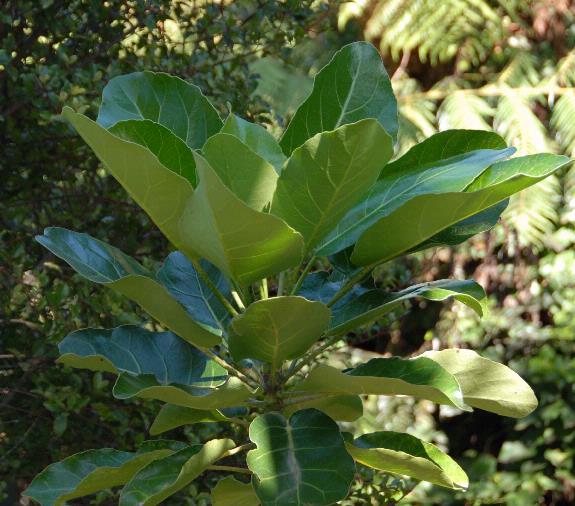
2. (noun) shining broadleaf, Griselinia lucida - a shrub with large, leathery, very glossy, alternating leaves. The fruit is dark purple. It often grows up in trees, extending its white, pliable roots down the trunk of the host tree, eventually becoming an independent tree.
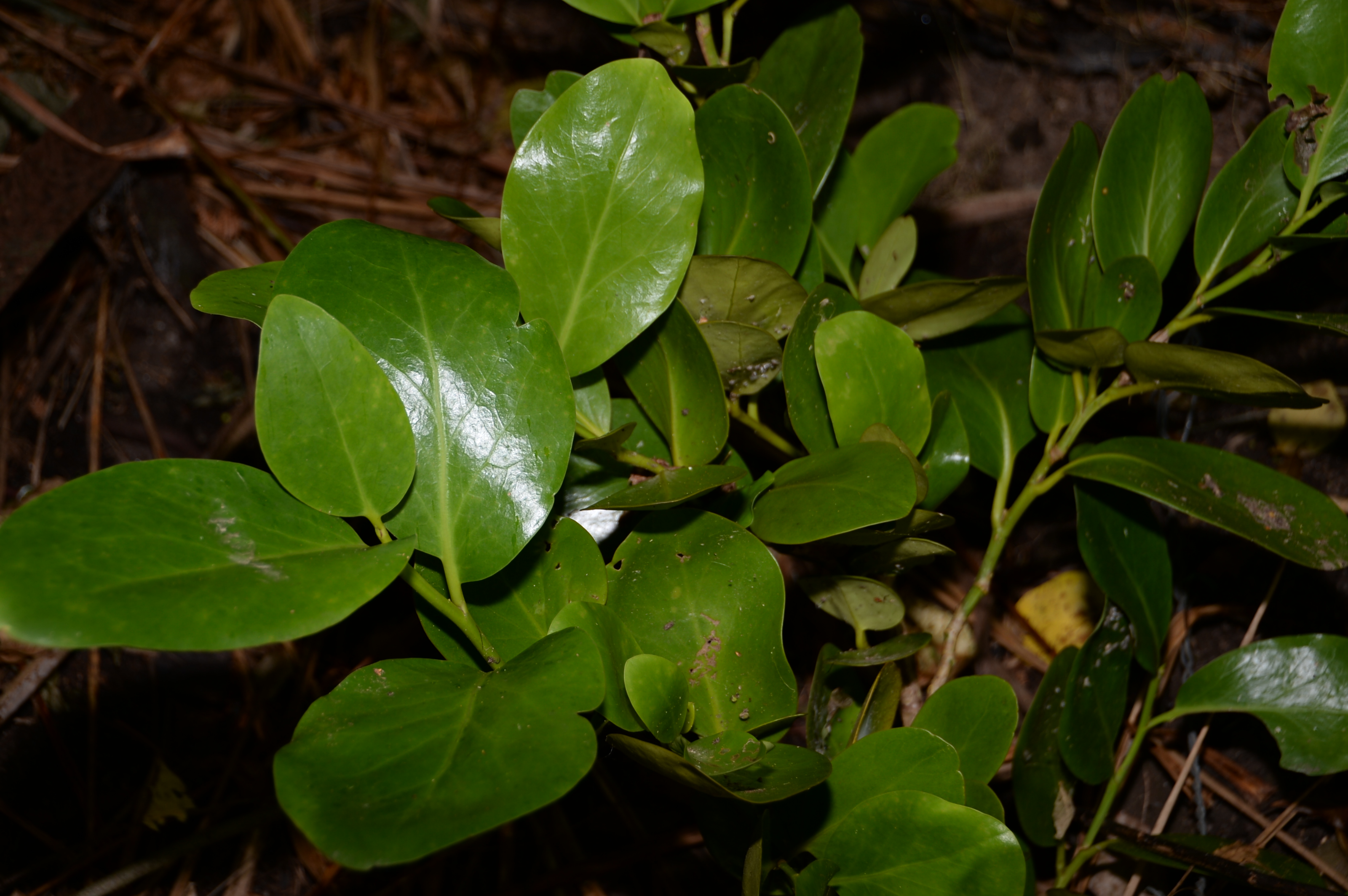
4. (noun) swamp maire, Syzygium maire - a tree of swampy forests with a smooth-barked trunk, red berries and elliptic-oblong leaves tapering at each end and in pairs.
See also maire tawake