manono
1. (noun) kanono, large-leaved coprosma, Coprosma grandifolia - a small native shrub to 6 m tall of lowland forests with pale bark and leathery-large leaves which are olive-green and wavy-edged. Flowers are greenish-white, spindly, in loose clusters. Its reddish orange berries are attractive to birds. The bark is used for producing the yellow colouring when dyeing muka.

raurākau
1. (noun) manono, kanono, large-leaved coprosma, Coprosma grandifolia - a small native shrub to 6 m tall of lowland forests with pale bark and leathery-large leaves which are olive-green and wavy-edged. Flowers are greenish-white, spindly, in loose clusters. Its reddish orange berries are attractive to birds. The bark is used for producing the yellow colouring when dyeing muka.

2. (noun) rangiora, Brachyglottis repanda - a small tree to 6 m tall with very large, dull green, soft leaves which are white and felted underneath and have wavy edges. Tiny fragrant flowers cover the tree during spring and early summer. Found in both the North and South Islands.
kapukiore
1. (noun) manono, kanono, large-leaved coprosma, Coprosma grandifolia - a small native shrub to 6 m tall of lowland forests with pale bark and leathery-large leaves which are olive-green and wavy-edged. Flowers are greenish-white, spindly, in loose clusters. Its reddish orange berries are attractive to birds. The bark is used for producing the yellow colouring when dyeing muka.
patutiketike
1. (noun) manono, kanono, large-leaved coprosma, Coprosma grandifolia - a small native shrub to 6 m tall of lowland forests with pale bark and leathery-large leaves which are olive-green and wavy-edged. Flowers are greenish-white, spindly, in loose clusters. Its reddish orange berries are attractive to birds. The bark is used for producing the yellow colouring when dyeing muka.
2. (noun) karamū, shining karamū, Coprosma lucida - tall native shrub with green stems and glossy green pairs of leaves. Leaves 12-17cm long, oval, tapering to leaf stem and tip, main vein pale and causing a ridge on the upper and lower surface of leaf. Small colourless point on stem between bases of leaf pairs. Fruit red, in clusters.
See also karamū
Synonyms: karangū, karamū, kāramuramu
kanono
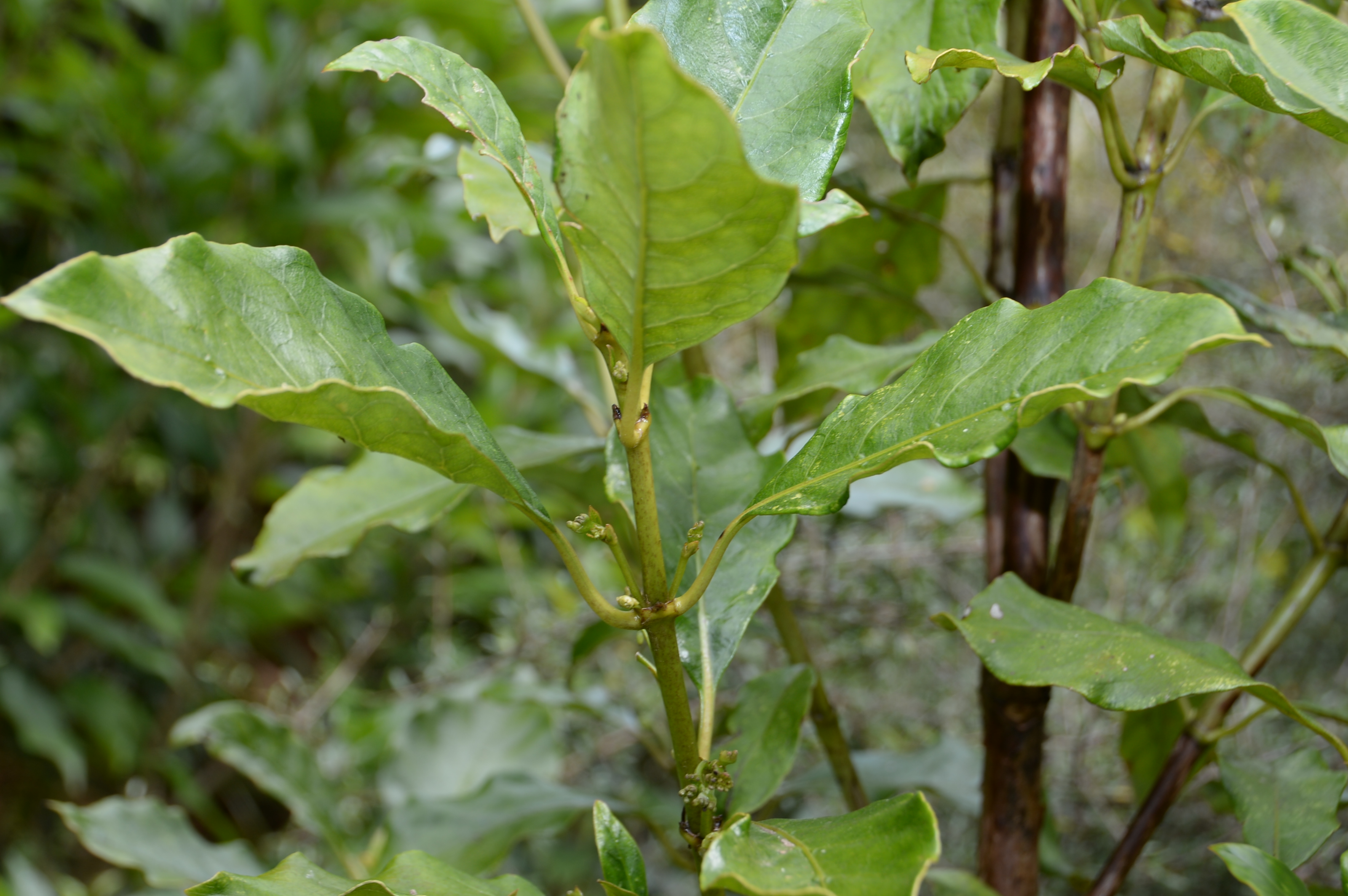
1. (noun) manono, kanono, large-leaved coprosma, Coprosma grandifolia - a small native shrub to 6 m tall of lowland forests with pale bark and leathery-large leaves which are olive-green and wavy-edged. Flowers are greenish-white, spindly, in loose clusters. Its reddish orange berries are attractive to birds. The bark is used for producing the yellow colouring when dyeing muka.
raurēkau
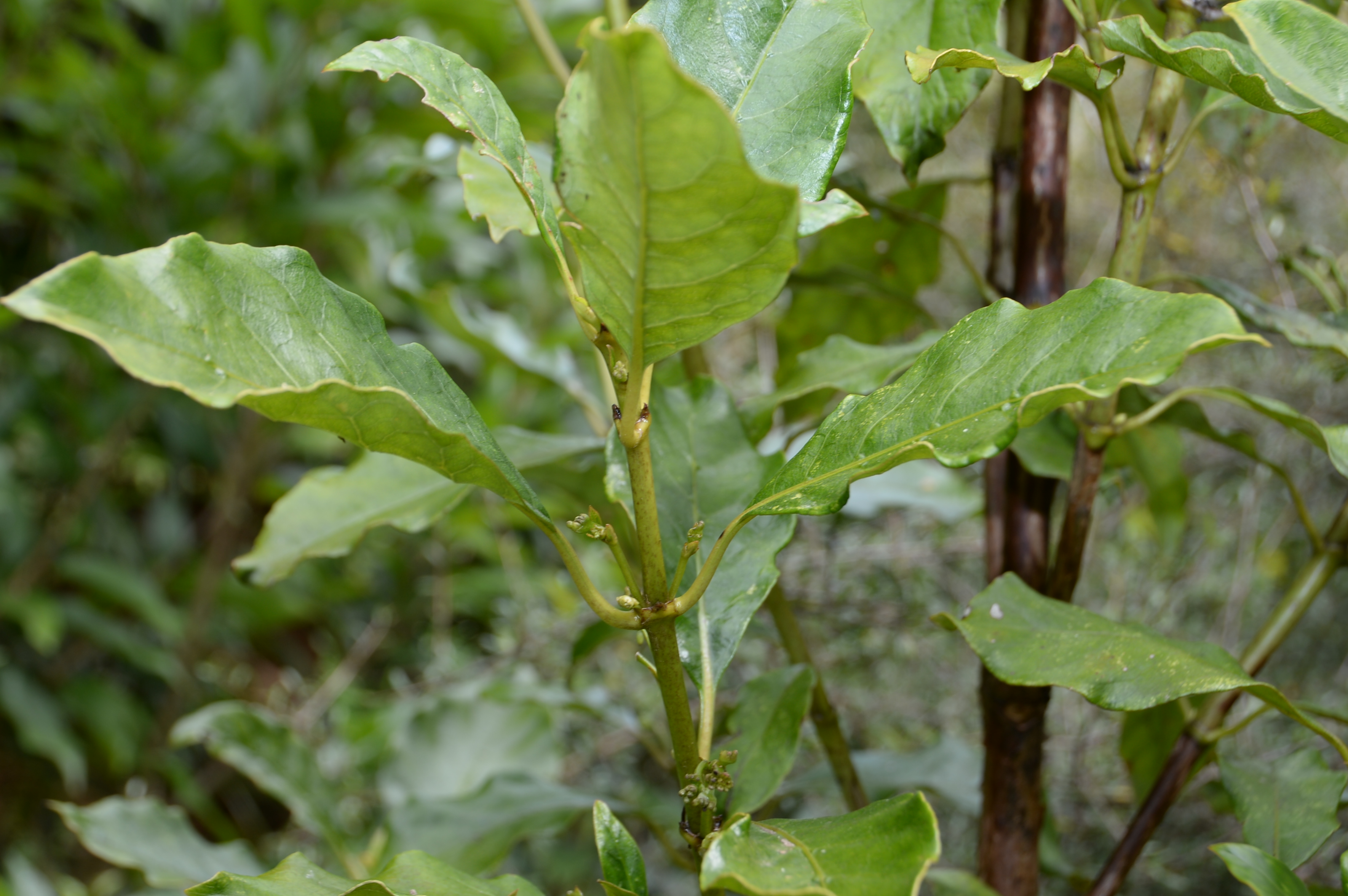
1. (noun) manono, kanono, large-leaved coprosma, Coprosma grandifolia - a small native shrub to 6 m tall of lowland forests with pale bark and leathery-large leaves which are olive-green and wavy-edged. Flowers are greenish-white, spindly, in loose clusters. Its reddish orange berries are attractive to birds. The bark is used for producing the yellow colouring when dyeing muka.
2. (noun) rangiora, Brachyglottis repanda - a small tree to 6 m tall with very large, dull green, soft leaves which are white and felted underneath and have wavy edges. Tiny fragrant flowers cover the tree during spring and early summer. Found in both the North and South Islands.