wenewene
1. (noun) hole in a flute, finger hole.
(Te Māhuri Textbook (Ed. 2): 168, 171;)
Ko te nuinga e toru ngā wenewene (Toi 1991:21). / The majority have three fingerholes.
See also kōwenewene
2. (noun) gourd plant, Lagenaria siceraria - a cultivated plant. The hard shell of the fruit is used for a variety of purposes.
See also hue
Synonyms: whāngai rangatira
2. (noun) dissatisfaction, discontent, dislike, antipathy.
Pū kaha ana te wenewene i te itiiti rawa o ngā utunga i tukua mai (TTR 1996:267). / There was much dissatisfaction with the inadequacy of the payments awarded.
kōauau
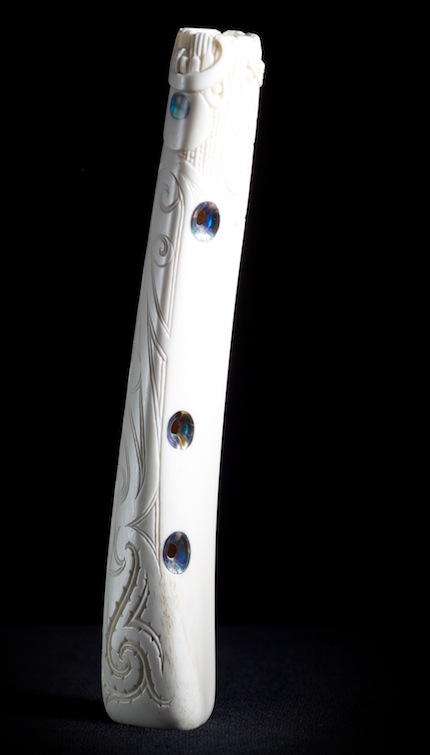
1. (noun) cross-blown flute - smaller than a pūtōrino, this instrument was traditionally made of wood, bone or a species of kelp. Most have three finger holes (wenewene), but some have none and others five or six.
(Te Māhuri Textbook (Ed. 2): 167-168, 170-171;)
I runga i tana kōhatu a Hinemoa e noho ana i te tangihanga mai o te kōauau a Tūtānekai i Mokoia (TTT 1/6/1927:599). / Hinemoa was sitting on her rock when Tūtānekai played his flute on Mokoia Island.
2. (noun) bull kelp, Durvillaea antarctica - a large, brown, edible seaweed several metres long with an extraordinary holdfast against violent seas on rocky coasts. Has a fleshy stem and the blade is broad and leathery or divided into long thongs. Common around the South Island coast. Used to make pōhā for preserving birds.